If you’re already subscribed and/or appreciate the free summary, hitting the LIKE button is one of the best ways to support my ongoing research.
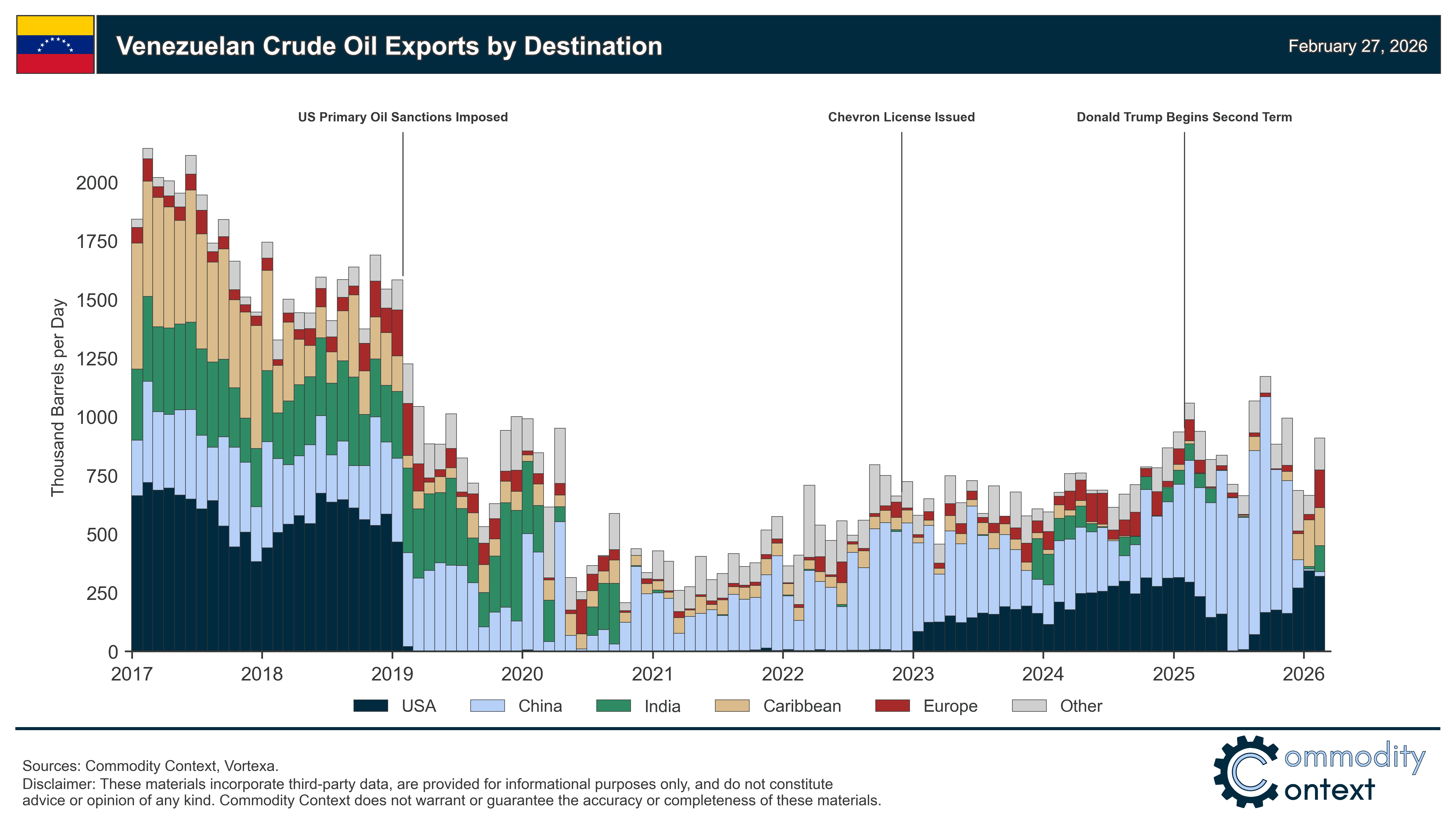
Venezuelan crude is being fully reintroduced to the unsanctioned oil market for the first time in seven years, and the question on everyone’s mind is where those boosted heavy oil supplies will land.
Historically, the US has served as the largest market for Venezuelan heavy crude, alongside China, India, and the Caribbean, and the bulk of post-Maduro shipments have been routed to the US Gulf Coast.
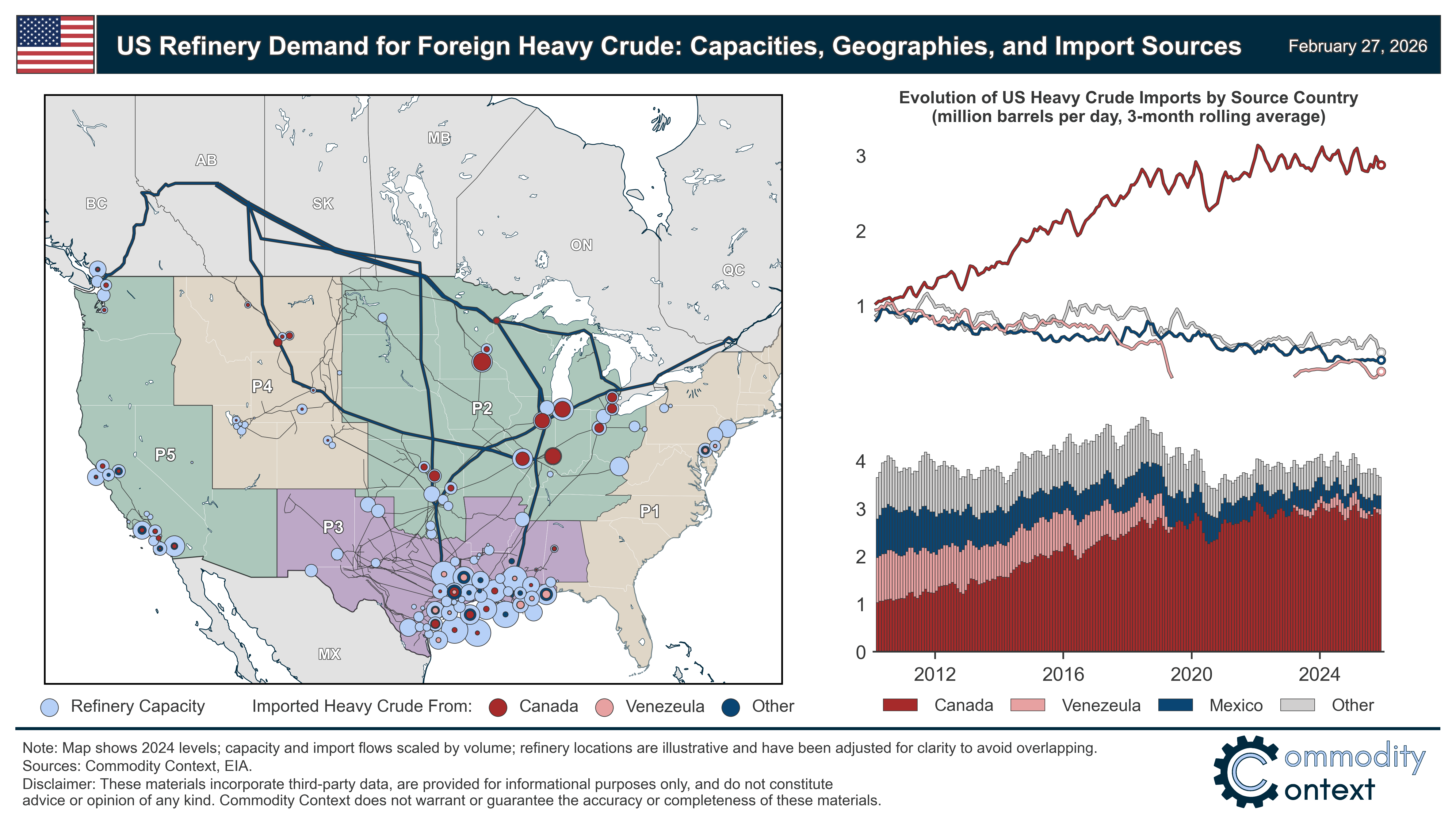
The US is importing more or less the same amount of heavy crude over the past decade and a half, but the regional distribution of that demand has shifted substantially: more in the Midwest, much less in the US Gulf Coast.
Just seven refineries dominated US imports of Venezuelan crude, and only four of those have accounted for more than 75% of imports in 2024 and represent the bulk of buying since Trump has eased sanctions.
At minimum, it seems certain that Venezuelan crude imports will be reestablished as a core, but partial, source of the USGC’s much diminished heavy crude mix.
It is less clear the degree to which Venezuelan crude can regain its pre-2019 levels given the way in which the US heavy crude import market has evolved during this time period.
The amount of displaced non-Venezuelan heavy crude—from Canada, Mexico, Colombia, and others—is, therefore, likely somewhere in the low hundreds of kbpd.
In the most benign scenario, the availability of additional Venezuelan heavy could make for a non-zero sum competition, reversing the structural decline in USGC heavy crude imports—albeit at the cost of weaker heavy crude pricing in the region.
Venezuelan heavy crude is beginning to reenter the normal, unsanctioned oil market in size after seven years out in the cold. With Venezuelan President Nicholas Maduro in US custody and Washington effectively in control of the country’s oil industry (see: Can Trump really Revive Venezuela’s Oil Industry), Venezuelan crude is flowing again in a way not seen since before Trump imposed heavy sanctions on Venezuelan state-owned oil producer PDVSA in early 2019.
But, as Venezuelan supplies ramp up from cratered January levels, there remains considerable uncertainty about where Venezuelan heavy barrels can find a home or how free that marketing effort will be.
Which Way, Venezuelan Barrel?