

Happy New Year, Oil Watchers,
And, oh, boy, is 2026 off to a start. The past 48 hours have been a blur of developments and media requests related to Nicholas Maduro’s capture by US forces and what this means for the oil market, so I wanted to put some of what I’ve been saying in one place for subscribers.
🎙️ In addition to the discussion below, I encourage you to check out my Oil Ground Up podcast episode from November with Venezuelan oil industry expert Francisco Monaldi for some important background context on how things stood heading into this latest development.
If you’re already subscribed and/or appreciate the free summary, hitting the LIKE button is one of the best ways to support my ongoing research.
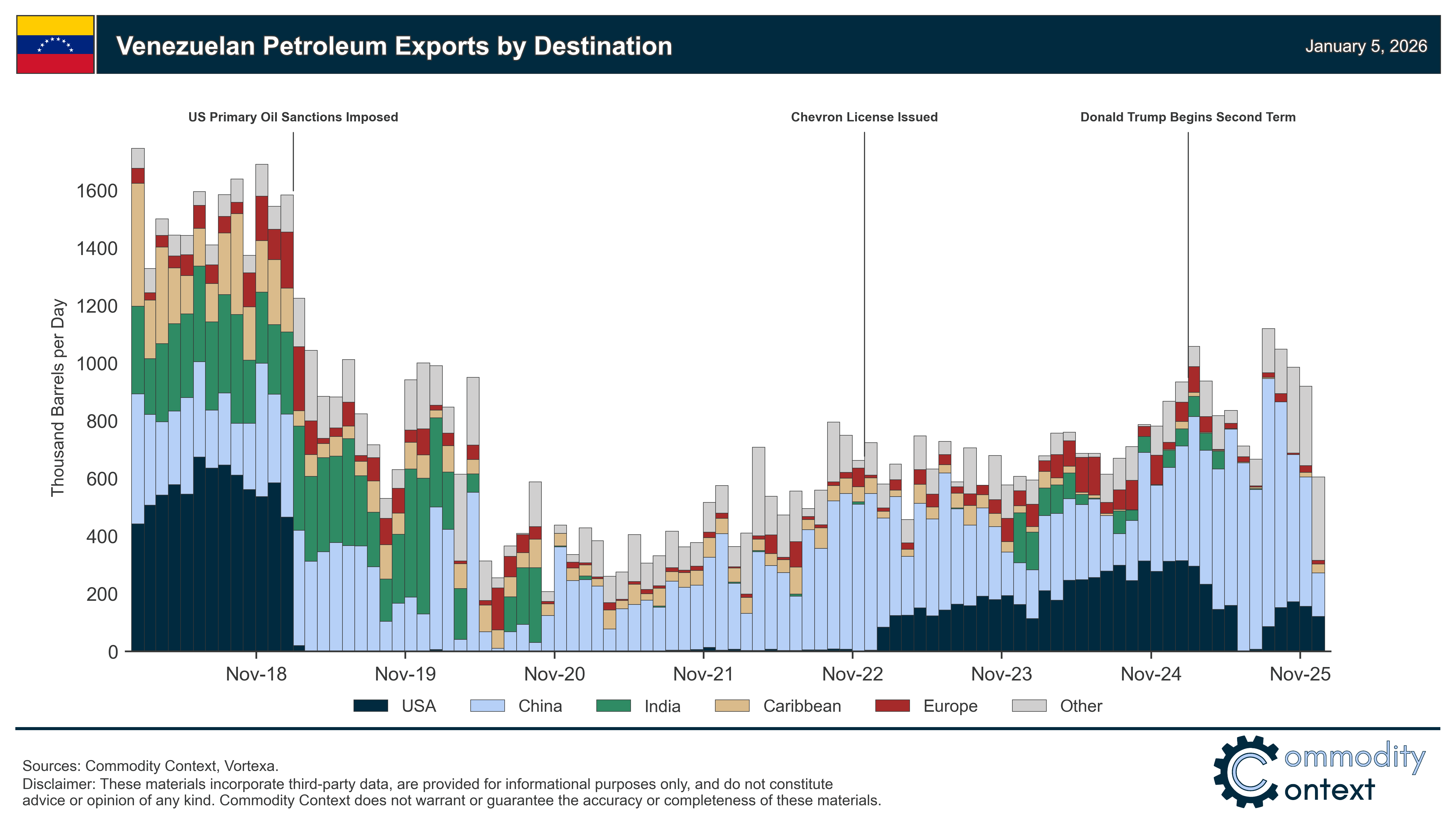
President Trump has captured Venezuelan President Nicholas Madura and boldly claimed that American oil companies can and will revitalize Venezuela’s dilapidated industry.
Venezuela holds the “largest oil reserves in the world” (big caveat: *on paper*) but years of US sanctions and, more recently, a military blockade on ports have cratered crude oil exports and now production itself.
In the short-term, any loosening of the US-imposed “quarantine” would increase Venezuelan supply; however, the restored flow of Venezuelan barrels will largely go to China, not the US.
In the medium-term, Venezuelan crude will reach the nearby US Gulf Coast only once US sanctions are repealed or additional waivers are issued; this would put modest price pressure on other heavy sour grades, like Western Canadian Select and Mexican Maya.
In the long-term, Venezuela can obviously produce more oil—easily 2–2.5 Mbpd over the next 5+ years—but it will take monumental investment from US companies that have already been burned in this exact market.
Venezuelan President Nicholas Maduro is currently sitting in custody in New York, indicted for a litany of narco terrorism, drug, and gun charges. He was captured, alongside his wife, in a raid by US forces over the weekend. Now, US President Donald Trump has announced that Washington is “in charge” of Venezuela and its vast oil reserves, and plans to have American companies revitalize the dilapidated industry.
What any of this historic development means for Venezuela—or for the United States, for that matter—remains a wide open question, but we’ll focus today on what this likely means for the oil market. Where the volume and geographic direction of Venezuelan exports goes over the coming weeks, months, and years will depend largely on 1) the stability of new leadership in Caracas, 2) the future of the US current blockade, 3) the status of US sanctions, and 4) the durable policy environment in Venezuela going forward.
Let’s review what we know about this evolving situation.