

I’ll be in Washington, DC next week discussing our Beijing Swing research and sharing Hormuz Crisis thoughts with clients, other analysts, and policymakers. Drop me a line if you’re interested in grabbing a coffee or having me speak to your team. We’re also looking to put together a subscriber event while I’m in town; if you’re interested, please add your name to the form below the subscriber paywall.
If you’re already subscribed and/or like the free summary bullets, hitting the LIKE button is one of the best ways to support my research.
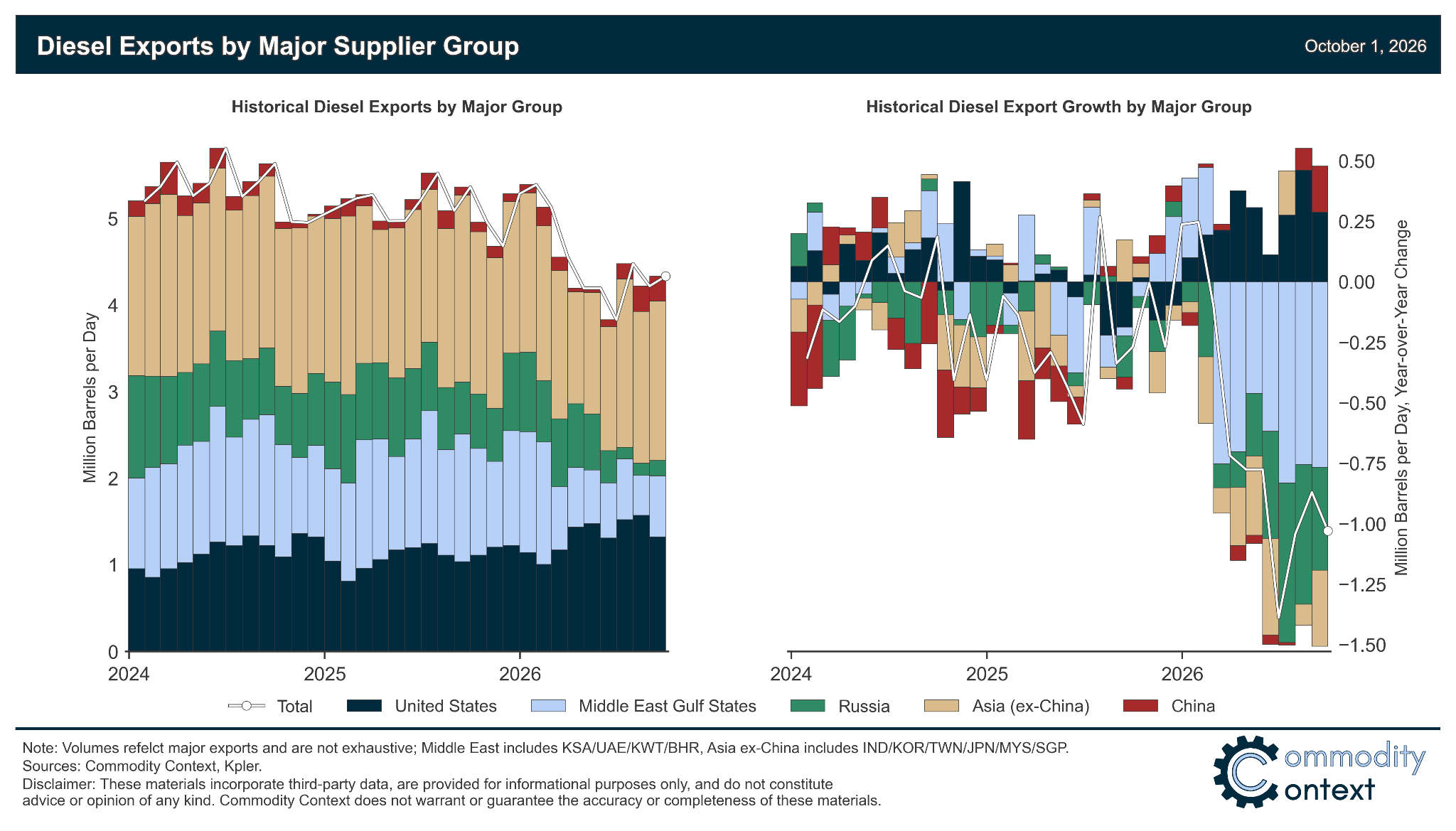
A global shortfall of diesel supply is being driven by both the ongoing Hormuz crisis and escalating attacks by Ukraine against Russia’s refinery fleet as seaborne exports from the world’s major exporters fall 1-1.5 MMbpd.
Diesel prices are skyrocketing—hitting all-time highs this week—in search of demand-destructive levels and diesel term structure is indicating a chronic rather than short-lived crisis.
Absent any durable supply response, diesel demand-destructive prices will almost certainly force a major downward shift in global economic activity given that the cost of the fuel is sprinkled across almost every supply chain.
A boost in Chinese diesel exports could ease the supply crisis but Beijing isn’t in the habit of letting its independent refineries chase global market profits and, more importantly, appears focused on maintaining the domestic economy and preserving domestic stocks.
Similarly, Europe possesses sizable diesel reserves but does not appear keen to meaningfully tap those fuel reserves at scale yet, even despite threats from Washington—perhaps on broader expectations that there is further, truly catastrophic tightness barreling towards us.
Now, the US is now considering a diesel export ban—a cursed policy option that will quickly backfire—as world-leading export volumes come face-to-face with high and politically untenable domestic US pump prices heading into midterm elections next month.
Diesel fuels the global economy, propelling the road freight transportation and industrial vehicles that make the world go round. The trouble is that we, increasingly, do not have enough of it. The reason for the shortfall of diesel supply is, by this point, well known. The diesel crisis began with the Iran War and then grew ever more acute as Ukraine began escalating attacks against Russia’s refinery fleet—bringing the pain of the war to the Russian homeland and largely knocking the world’s second-largest diesel exporter out of the market.
Absent a durable supply response, the market is in desperate search of demand destructive pricing. This month, scarce supply pushed diesel futures to all-time highs of nearly $230/bbl in New York Harbor. The average US diesel pump prices soared above $6.50/gal for the first time in history. But diesel demand destruction is difficult and slow: unlike other consumer fuels, like gasoline, diesel is an embedded structural cost throughout most of the global economy, with currently high prices gradually sapping margins and increasing consumer costs through channels that are impossible to avoid.
But there is no “dark transit” loophole for a global shortage of refining capacity. Unlike the broader oil market, diesel faces a far more straightforward dilemma stemming from the Iran War. The broader oil market can benefit from rerouting pipelines, crude-heavy SPR releases from the US and Japan, and the rising flow of largely crude oil dark-transited through the Strait of Hormuz. But diesel can only be produced by transforming a barrel of crude oil—and only part of the crude barrel at that!—in an oil refinery, and the world is increasingly short of refining capacity accessible to the market.
While diesel scarcity has been a long-running story since, at least, 2022 (see: Collapsed Bridge to the Refining Crisis and Refiners’ Unbalanced Barrel), the diesel market now additionally faces the proliferation of war, maritime bottlenecking, and asymmetric attacks on fixed refinery infrastructure on top of the underlying issue of global refining capacity. Let’s dive into what’s driving the current diesel market crisis and the limited options for durable near-term relief.