

It’s happening: the US and Israel are at full-blown war with Iran, Tehran has retaliated much more forcefully than we saw last June, missiles and drones are crashing around the cities, military bases, and facilities throughput the region, and shipping flows through the all-important Strait of Hormuz have already been acutely disrupted—though importantly that’s not the same thing as the Strait being closed. There will be lots to cover in this conflict and the obvious potential for massive spillovers into the global oil market, but for now I wanted to provide an early sense of what I’m watching right now, where we stand, and what I’ve been saying to the endless wave of media trying to parse this monumental development.
If you’re already subscribed and/or appreciate the free summary, hitting the LIKE button is one of the best ways to support my ongoing research.
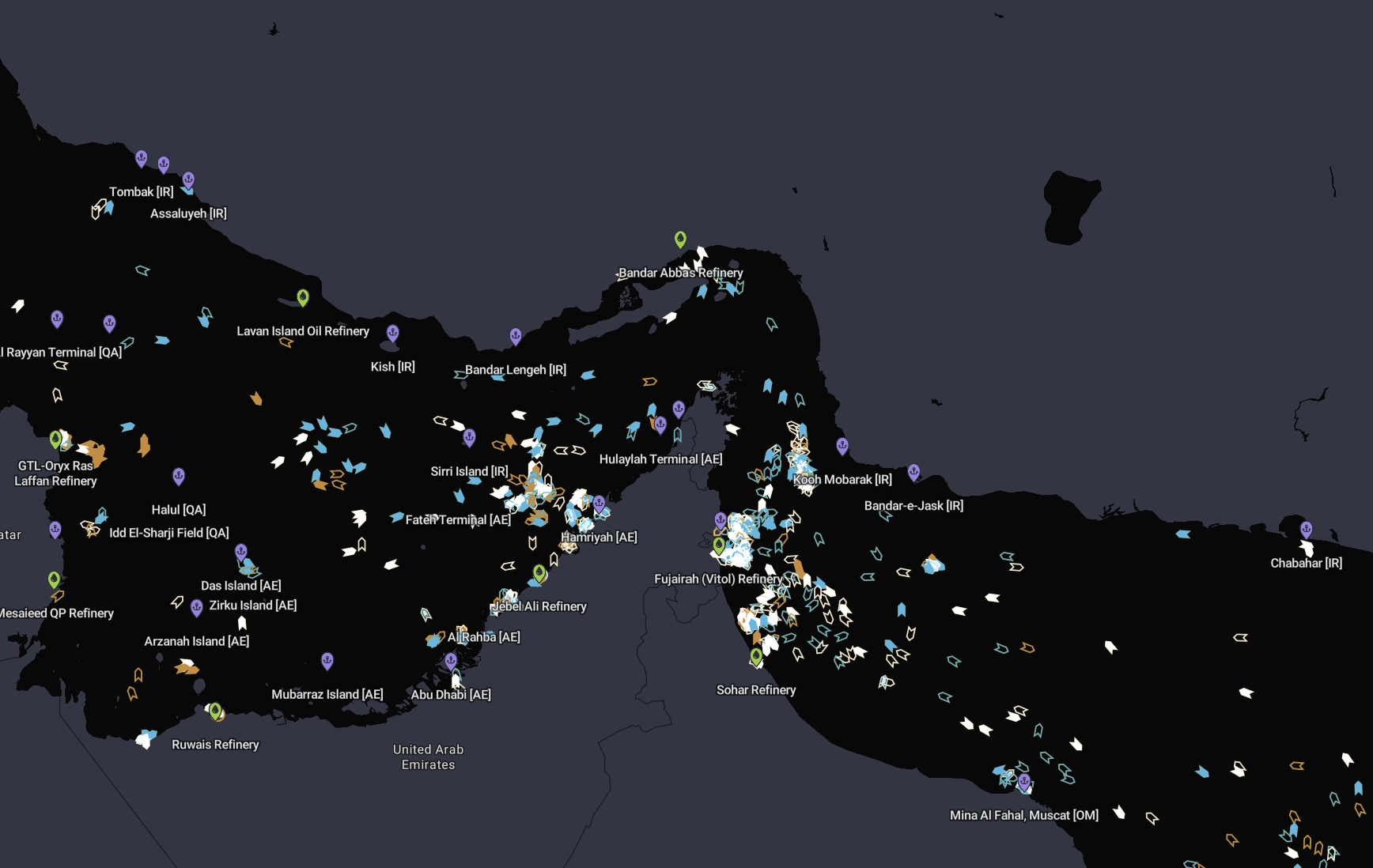
Strait of Hormuz tanker map; source: Vortexa
The United States and Israel began bombarding Iran on Saturday morning local time, thrusting the oil market into its most perilous situation since Russia’s invasion of Ukraine in 2022. We are now actively speed-running the single greatest threat to global oil supplies: the combined risk of (1) some kind of closure of the Strait of Hormuz and (2) Iran launching attacks against upstream production assets across the Gulf. No surprise, prices popped roughly $10/bbl higher to $82/bbl Brent when futures opened; but, those prices backslid pretty quickly to a still very impressive $79—up roughly $7 from Friday’s close.
Let’s dig in.