

Below the paywall you will find the latest monthly edition of the Commodity Context OPEC+ Data Deck (53-page PDF), tracking groupwide and member-level official production estimates, quotas, compliance, exports, and official production data reconciliation vs output implied by visible movements.
If you’re already subscribed and/or like the free summary bullets, hitting the LIKE button is one of the best ways to support my research.
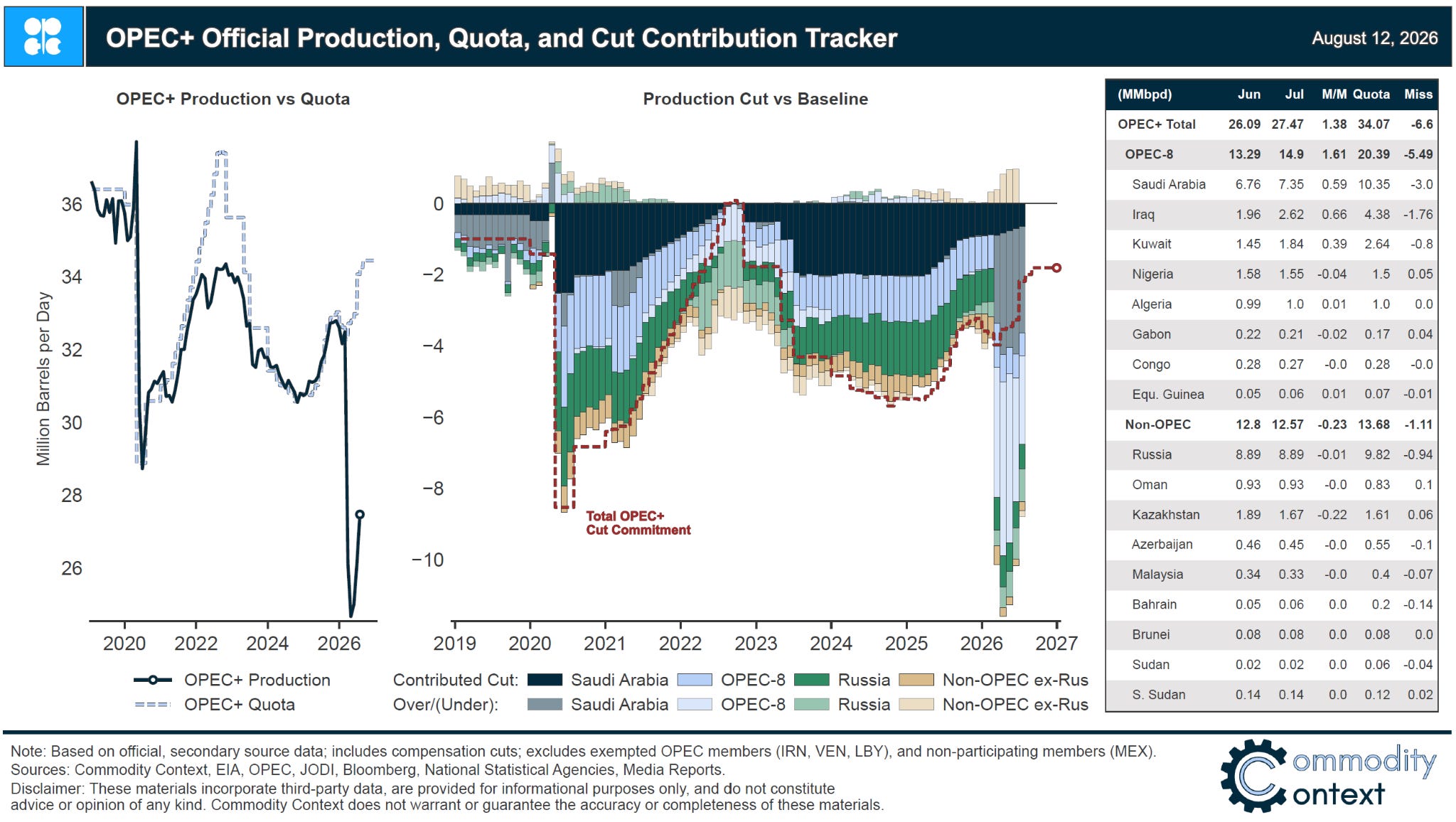
Quota participating OPEC+ crude production rose +1,380 kbpd m/m to average 27,468 kbpd in July, the highest level since before the onset of the Iran War, amidst the ongoing recovery in core OPEC Gulf membership—Saudi Arabia, Iraq, Kuwait—though blunted by a pullback in Kazakh output amidst mounting Ukrainian attacks in the Black Sea.
The post-MOU surge in oil flow exiting the Strait of Hormuz has rolled over following a resumption of attacks against regional shipping, likely halting the Gulf’s production recovery in its tracks; inbound ballast (i.e., empty) tanker capacity is even weaker than the exit pace is once again the binding constraint on future growth.
The producer group hiked production quotas by 188 kbpd for September, formally completing the windup of the second 1.66 MMbpd production cut tranche (initially announced April 2023); sources indicate that the producer group will likely pause any further hikes until early 2027 at the earliest, with only the “official” 2 MMbpd full membership production cut announced in October 2022 remaining on the books.
[Full PDF Deck and additional analysis below paywall]