

Happy Friday, Oil Watchers!
Every week, I summarize and analyze developments in flat crude prices, calendar spreads, high-frequency inventories, refined products, and positioning data, as well as a taste of the themes I’ve been thinking about or following closely—including our ongoing tracking of shipping flows throughout the Middle East.
Paid subscribers can access the latest weekly update of the detailed 40-page PDF Market Positioning Data Deck at the bottom of this report.
🎙️ Our summer interview hiatus is finally over and we’re back with another episode of the Oil Ground Up podcast to speak with David Weck, chief economist of tanker tracker Vortexa, about plunging volumes of oil on water, sorting fact from fiction on Hormuz and Red Sea shipping activity, and just how scarce the global diesel trade has become.
For more public oil market context, check out my comments to Wall Street Journal (print) concerning the pace of confirmable transits through the Strait and our Q&A in Responsible Statecraft (print) and how oil markets have evolved through the Hormuz crisis.
If you’re already subscribed and/or appreciate the free chart and summary, hitting the LIKE button is one of the best ways to support my ongoing research.
Summary
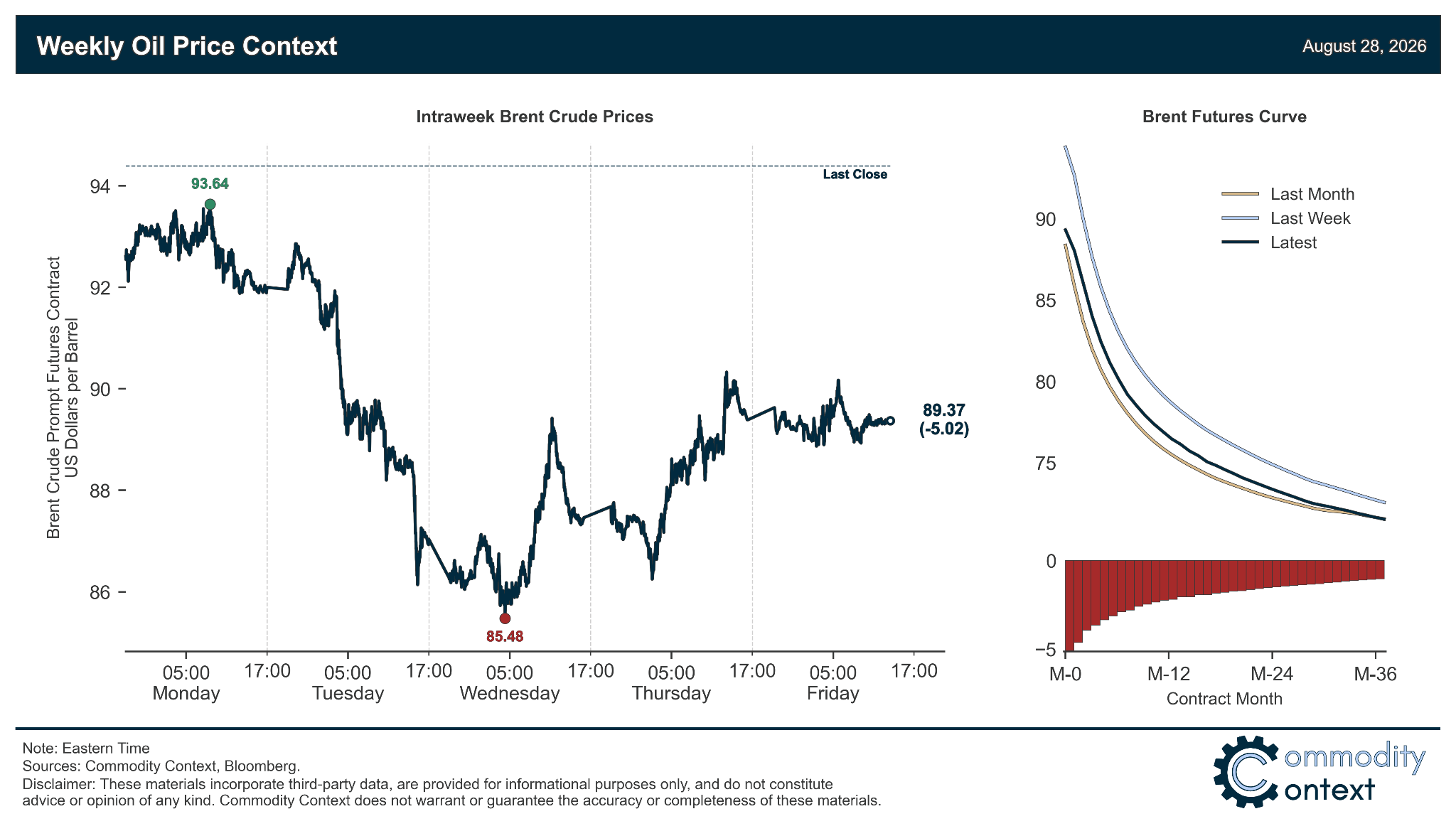
Flat Prices fell ~$5/bbl for Brent to finish just below the $90/bbl mark as markets unwound their prior concern that the promised US sanctions package could re-escalate the conflict as measures proved only incremental and the physical flow of oil through Hormuz continued to rise.
Timespreads continue to indicate modest tightness in prompt crude availability for both WTI and Brent compared to a more notably strengthening market for Middle Eastern-delivered grades; Dubai’s relative strength likely reflects both strong Asian refiner demand and ongoing losses of previously-expected Saudi barrels through the Bab el-Mandeb.
Inventories were mixed between across-the-board headline builds in all major geographies and the fact that builds, especially stateside, came in the form of already-well-supplied products; meanwhile, stocks of far more precarious gasoline and diesel continued to draw down, further tightening those already historically tight road fuel markets.
Refined Products remain far and away the tightest corner of the oil complex, with both gasoline and diesel crack spreads at all-time seasonal highs; diesel margins pulled back very modestly while gasoline cracks leapt higher ahead of contract expiry as US inventories continued to plunge despite the US refining fleet running full-out.
Market Positioning data confirmed that speculators were net sellers of crude over the past week-through-Tuesday; the balance of positioning risks to crude are still to the downside given modestly overextended net length, though some upside room remains should the conflict escalate, whereas both gasoline and diesel are even more acutely overbought and at risk of sharp temporary pullbacks even if fundamentals remain scorchingly bullish.
As Well As more and more oil getting through the Strait of Hormuz (and less through the Red Sea), understanding the balance of incentives and risks influencing the evolution of transit volumes, and the US reportedly musing about quasi-imperial control over a massive chunk of Venezuela’s oil reserves.