

Despite the Iran War and the largest supply crisis in the history of the oil market, historical data continues to flow and better furnish our understanding of what the market looked like going into this crisis.
This edition of the Global Oil Data Deck also explores some initial estimated Iran War impacts on global oil balances in addition to its usual tracking of global supply and demand developments.
This 73-page March 2026 edition of my monthly data-dense and visualization-heavy Global Oil Data Deck series (attached PDF below) is exclusive to paid Commodity Context subscribers.
Become a paid subscriber today to view the full Global Oil Data Deck report and join me in my hunt for ever-deeper oil & gas market context.
Member Exclusive: Context Call on Thursday, March 26, 2026
Subscribe for details and registration link; paid subscribers will find link below paywall
If you’re already subscribed and/or like the free summary bullets, hitting the LIKE button is one of the best ways to support my research.
Overview
The global liquids market tightened notably in January to its least oversupplied since summer driving season thanks to supply losses in the US and Kazakhstan combined with robust demand across all major regions. However, pre-Iran War surpluses feel like a distant memory today.
Iran War Oil Market Balance Impacts
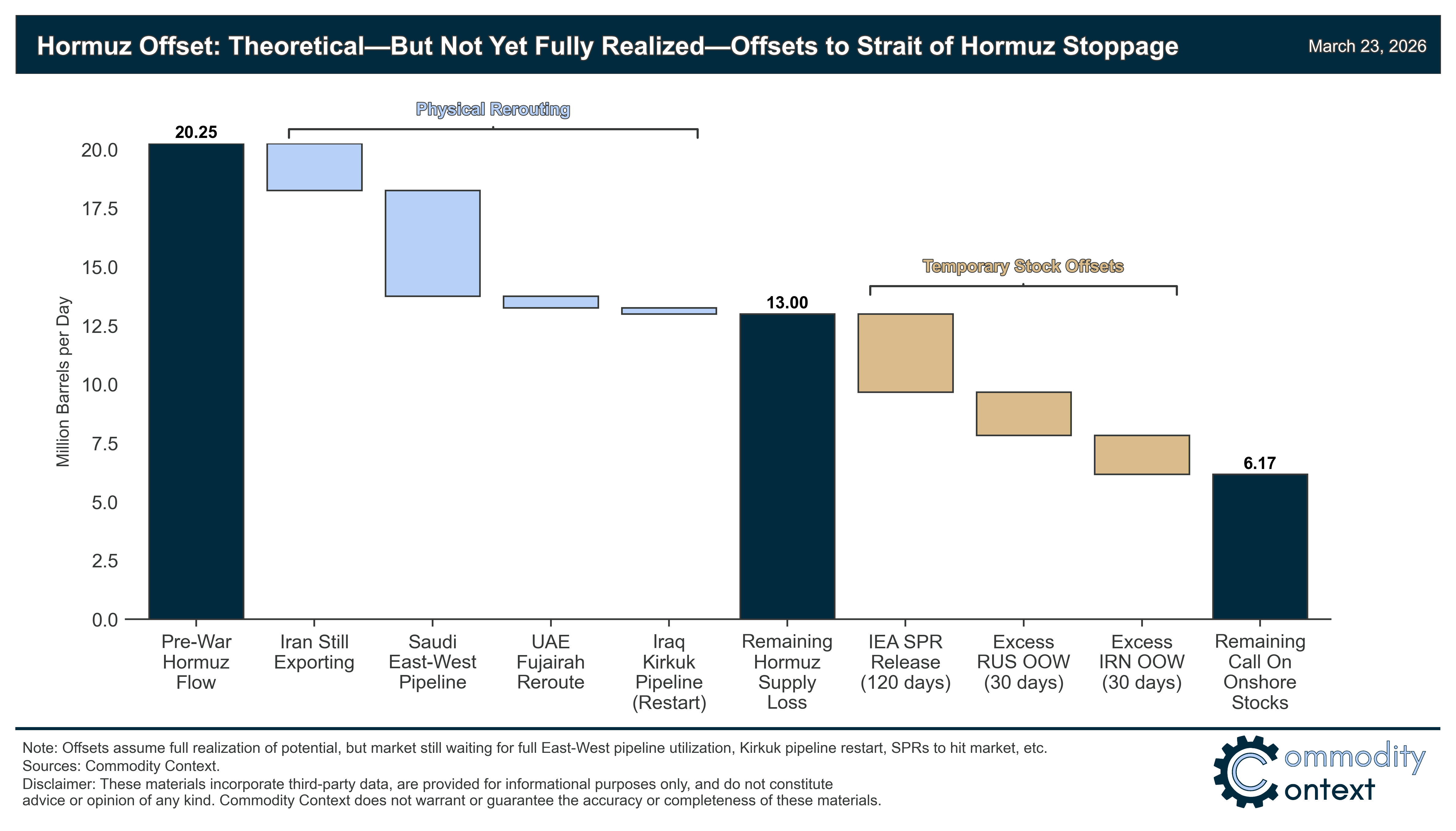
Market balance impacts from the Hormuz Stoppage are two-fold: production losses (i.e., confirmed shut-ins) and supply losses (i.e., the “air pocket” in normal exports that will hit importing nations). Confirmed production shut-ins alone are expected to push the oil market into its largest deficit on record through the end of March, and the full brunt of supply (i.e., Gulf export) losses will roughly double the immediate market impact of those realized production losses if Hormuz flow remains shut.