If you’re already subscribed and/or like the free summary bullets, hitting the LIKE button is one of the best ways to support my research.
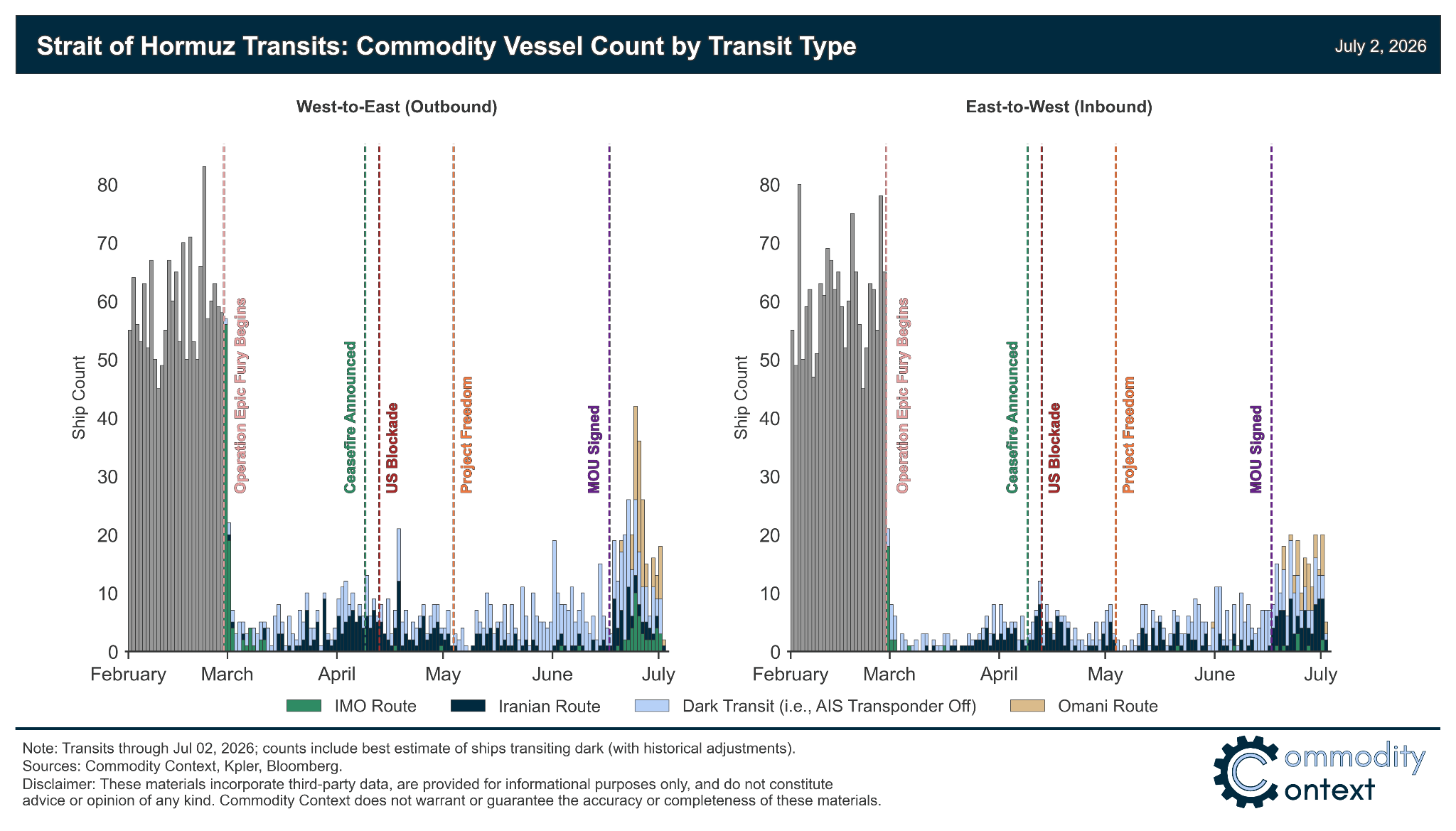
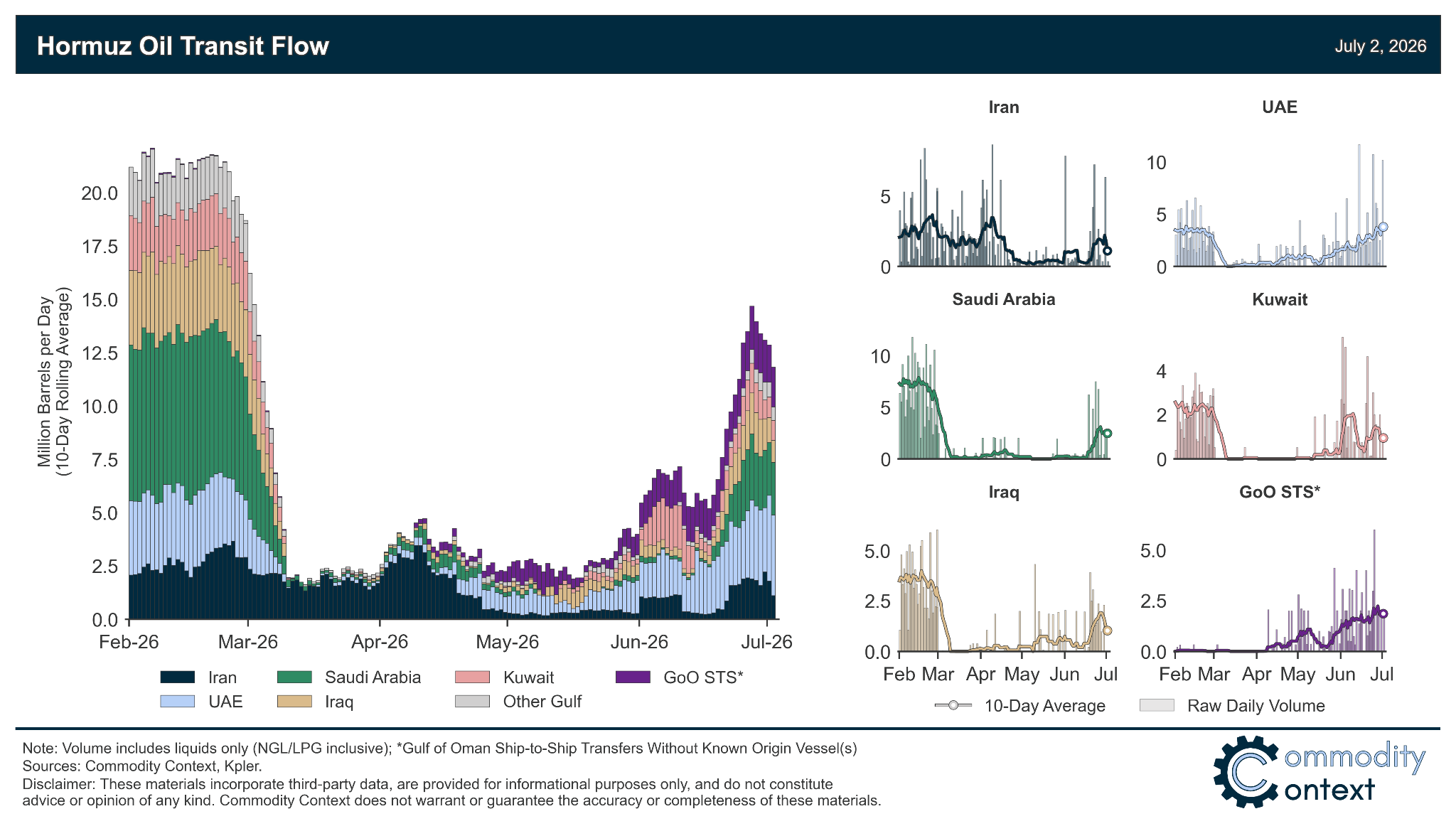
The recovery in Hormuz flows—in both directions—is running ahead of expectations, especially in terms of inbound, empty tankers that are needed to resume fresh loadings; obvious risks remain given Tehran’s still-unsettled claim over control of the Strait.
Fresh loadings have notably improved and, with them, estimated upstream production; however, the recovery in upstream production is lagging empty tanker capacity, which indicates a bottleneck is upstream of shipping flows.
Production recovery has been uneven and volatile across the Gulf: the UAE’s recovery has been the strongest, Kuwait’s recovery has been choppy, Saudi Arabia’s recovery is running behind expectations (a purposeful choice?), and Iraq’s recovery has been the weakest.
Overall, the recovery in Middle Eastern supply is outpacing our initial expectations and, importantly, Chinese-depressed import demand remains weak; the resulting mini-glut helps explain collapsing flat crude prices and the reemergence of prompt contango across all major crude grades.
The oil market stands at a bizarre interregnum, caught between the rapid rise in exiting oil flows through the tentatively reopened Strait of Hormuz and the ongoing China-driven weakness in Asian import demand. The initial recovery is running faster than expected in terms of both exiting and entering shipping capacity through the Strait of Hormuz, with the current bottleneck now appearing to be upstream of shipping as fresh loadings lag empty tanker availability in the Gulf.
Against this background, there is ongoing confusion regarding the specifics of the “recovery” in the Strait of Hormuz. We are seeing conflicting data reported for both (1) type of flows and (2) volume of flows. First, there are fundamentally different types of flows: Hormuz exiting transits, stranded oil on water in the gulf, fresh loadings, and production proper. Then, there is the ambiguity around the volumes of crude that have, for months, been successfully rerouted around Hormuz to the Red Sea and the Gulf of Oman.
This piece will just look at the flow of supply out of the Middle East from the initial disruption to the current recovery. While pieces of this Hormuz crisis flow equation have been published over the past month, this is an attempt to put it all together in one place. This piece will leave the China-depressed import market side for our next thematic report.
Stop, Drop, Rocket