

Hello, Commodity Context subscribers!
Our latest contribution to the Dispatch Energy newsletter, A Beginner’s Guide to Reopening the Strait, is reprinted in full below. You can also listen to the story via the recorded voiceover.
Welcome to Dispatch Energy! For weeks, diplomatic efforts to extend the ceasefire in Iran and reopen the Strait of Hormuz have floundered, with the Islamic Republic threatening to call off talks altogether in response to the latest round of fighting between Israel and its Lebanese proxy, Hezbollah. Even if Washington and Tehran do reach another memorandum of understanding (MOU) to halt the conflict soon, fully restoring energy shipments through the strait could take months or more.
Regardless of whether the reopening of the strait begins next week, next month, or next year, it is valuable to think through the arduous process of unwinding the Iran war shock. Let’s dig in.
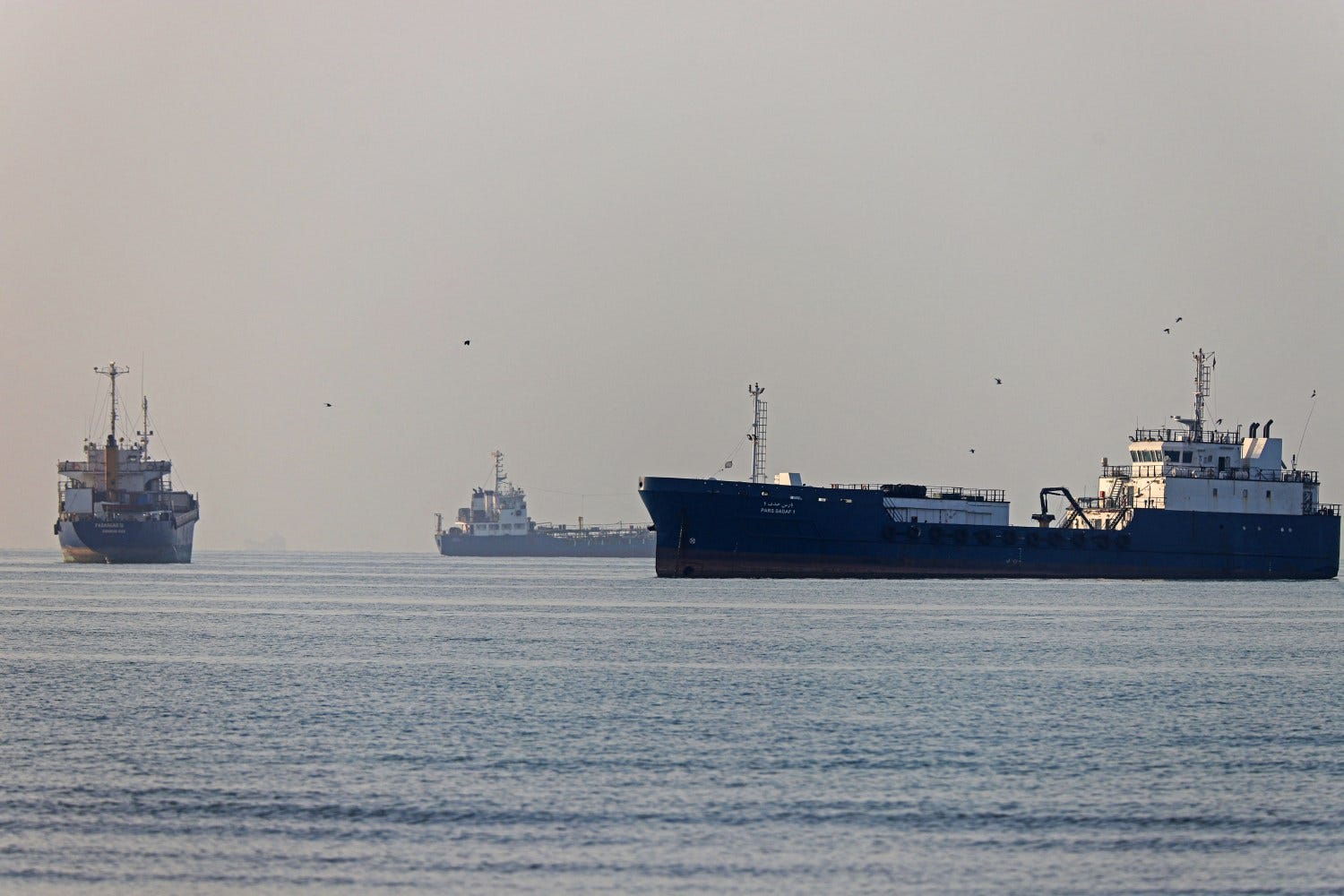
It’s worth noting at the outset that the first ships out of the Strait of Hormuz will carry what is now effectively a stockpile, not fresh flows. Fewer than half of the 2,000 captive ships are the large merchant vessels like tankers, bulk carriers, or container ships. Only about 200 of those are tankers, down from a peak of around 250 that were initially stranded, according to tanker-tracking data from market data provider Kpler. Those roughly 200 tankers are holding an estimated 160 million barrels of (stockpiled) oil. These barrels—when successfully floated out of the strait—are frequently mistaken for “offsets” to the supply crisis. But it’s important to think about them, instead, as a stockpile: barrels that have been produced but not supplied to the market.
The initial surge of Hormuz exits will simply move one “stock” of oil from the Gulf to the broader market. While this, no doubt, provides some immediate supply relief, it is more equivalent to a release from one of the numerous strategic petroleum reserves in terms of the overall oil stock and flow. Meanwhile, the core flow crisis remains because 13 to 15 million barrels per day of Middle Eastern oil production capacity has been forcibly shut-in by the closure of the strait, and this production will not restart until there is sufficient export capacity.
We must also consider timeline and volume. Iran has pledged to facilitate a return to prewar shipping levels within 30 days of the MOU’s signing. Depending on the source (e.g., S&P Global, Lloyd’s List), this refers to the roughly 150 large merchant ships that transited the strait each day prior to the war’s opening salvoes on February 28. But this figure includes not just tankers but also bulk carriers carrying goods such as metals, food, and fertilizer. Ultimately, the pace at which stranded vessels will clear the Gulf hinges entirely on the volume that Tehran allows to cross the strait each day. And that volume will hinge entirely on whatever MOU is ultimately signed by both parties.
Complicating matters further is that current shipping levels are unconfirmed, which could make monitoring MOU compliance on this condition difficult. Iran has been reporting oddly high transit levels via state and social media, claiming earlier this month that 30 to 40 ships were crossing the strait each day. But tanker tracking tells a completely different story: Fewer than 10 daily transits and on some days only two. The easiest explanation for the discrepancy is that the IRGC is counting smaller vessels, which ultimately don’t move the needle on commercial disruptions. This may be an effort to show “responsible management” of the strait, but I fear these inflated numbers could be used to claim compliance in reopening the strait in the event of a deal.
And it’s not just Iran that is being vague about vessel counts. The U.S. has claimed that it has “guided” 70 ships across the strait over the past three weeks, largely with their automatic identification system transponders deactivated. This is a plausible figure but, again, that’s only three to four ships per day across a waterway that regularly saw 130 to 150 daily transits prewar. More substantively, it remains unclear what this “guidance” actually amounted to and, more importantly, these “dark transits” have been entirely unverified to date.
Regardless, caution will be required in the early days of reopening. While there has not yet been any confirmation of a tanker detonating any of the sea mines that Iran continues to lay in the waterway, the first stage of any reopening effort would be weeks of escorted and closely surveyed transits to establish initial safe channels for entry and egress. Minesweeping is arduous and time-consuming work; a Pentagon briefing to Congress estimated that it would take up to six months to fully clear the strait of mines. And demining will not begin until the war has verifiably ended and ships can operate without the threat of Iranian missile and drone attacks.
Rebuilding routes.
Once the strait begins to empty, the next step is for tankers to (re)enter the waterway. The only way to begin restoring the enormous volume of oil and natural gas liquids (e.g., propane) production currently shut in across the Middle East is to restore export capacity. New, unladen tankers need to pick up currently stranded crude and enable companies to begin restarting shut-in wells.
Unfortunately, it will take weeks, if not months, to resume a prewar flow of inbound Gulf traffic. First and foremost, outbound ships that have been trapped for months will have a strong incentive to rush the exit, while inbound ships will be, very reasonably, apprehensive to reenter the waterway. This will be especially acute in the first days as the durability of any ceasefire agreement is tested. But even after that, the ever-present prospect of resumed hostilities will remain as the two parties try to find agreement on the always-thorny nuclear file.
There are also purely logistical concerns. Outbound ships will spend weeks or months delivering their cargoes before returning to the region to refill. These vessels will also likely require new crews in many cases and may be even further delayed by maintenance after months of irregular use. The stranded ships have reportedly accumulated thick barnacle infestations, which reduce speed and fuel efficiency and even threaten to completely immobilize the propellers or steering systems. Barnacles are always an issue for ships, but the acute infestation was worsened by sitting idle for months in extremely warm water. Some of this work will be required before the ships can safely exit the Gulf, and further, non-emergency work will be needed before they can return to normal service.
Meanwhile, potentially inbound ships have been diverted en masse. Many of the ships that had been servicing the Middle East-to-Asia route have diverted to facilitate the growing flood of exports from the U.S. Gulf Coast, which has put many of them on the wrong side of the planet were Hormuz to reopen tomorrow. Getting them back from the four winds will take weeks, and that’s after owners and insurers have decided it’s safe to return.
Resuming production.
Restoring upstream production is the only true offset to the gaping hole in the global supply balance. Over the past three months, 12 to 14 percent of global oil production has been lost, and the accumulated sum of unproduced Middle Eastern oil already exceeds 1 billion barrels relative to what we expected the region to produce this year. If this reopening began next week, unproduced oil would likely settle at around 1.5 billion barrels given that the restart process will take time.
And no one knows how long that restart process will take. This is a truly unprecedented event in both the brisk pace of shutdowns and the enormous scale of the reopening. In the best-case scenario, it will take weeks to months to get these wells flowing again. Ultimately, the exact timeline will vary by country and, more specifically, the depth of cuts. Saudi Arabia has been able to divert some of its oil exports via the East-West Pipeline to the Red Sea, so its production is only down roughly 30 percent. Meanwhile, Iraq and Kuwait have had to cut far closer to the bone; the CEO of the Kuwait Petroleum Corporation said in March that, were the war to end immediately, it would take three to four months to recover prewar levels of production.
Meanwhile, despite the broad expectation that shut-in production can be ramped up to prewar production levels without too much trouble, the extent of damage to upstream facilities remains unknown. Just one example: Iran struck Qatar’s Ras Laffan liquefied natural gas export facility in mid-March, causing what QatarEnergy’s CEO described as a reduced export capacity of 17 percent for up to five years. Even a 5 percent loss of overall prewar volumes would mean a sizable long-term hit of 650,000 barrels per day to global oil supply.
But the greatest threat of durable damage is to downstream facilities, such as refineries and petrochemical facilities. These were Iran’s preferred targets in the early weeks of the war, and most of the Gulf states have closely guarded information pertaining to the type and scale of facility damage. Durable damage to these sites could hamper immediate postwar supplies of scarce jet fuel and diesel even if crude flows are restored.
Looking ahead.
There is no “normal” going forward. The Strait of Hormuz had never been closed before, and this unprecedented event makes it much more likely that it will be closed once again in the coming years. This is a gargantuan shift in risk outlook for the world’s most important source of oil supply.
All of this means that inventories are critical moving forward. First, countries across the world will need to restock their reserves following massive wartime releases. Second, the new reality will be an expansion of postwar inventories, both strategic and commercial. It’s been clear throughout this crisis that countries underinvested in strategic stockpiles, like India, have been particularly vulnerable to the Hormuz shock and are now working to expand their reserves.
Inertia is the greatest hurdle at this stage, with neither Iran nor the U.S. seeming sufficiently compelled to cede ground and come to an agreement. Every week that this crisis drags on puts additional fundamental strain on the oil market: falling stocks, growing scarcity, and rising prices to curtail demand. If President Donald Trump chooses only to make a deal when the market pain becomes acute, then this fundamental strain could continue to accrue for months—even after Washington and Tehran finally ink an agreement.
The oil market has been abnormally patient thus far through the largest supply shock in the industry’s history, but that patience can only hold for so long. Commercial inventories and other buffer stocks are drawing down at the fastest rate on record and prices will eventually need to ratchet higher to ration constrained supplies.
Disclaimer: These materials incorporate third-party data, are provided for informational purposes only, and do not constitute advice or opinion of any kind. Commodity Context does not warrant or guarantee the accuracy or completeness of these materials.